


NUS Architecture vs SUTD Architecture: Old Guard or New Standard?
The architects who shaped Singapore's skyline in the decades after independence were, almost without exception, trained in one place. NUS's Department of Architecture traces its roots to 1958, when it began at Singapore Polytechnic, moving into the university's own framework in 1969.
Sixty-seven years is a long runway. It has produced not just graduates but an entire generation of the profession, and the QS World University Rankings by Subject for Architecture and Built Environment 2026 reflects exactly that accumulated weight: NUS ranks 7th globally, the top-placed university in Asia for the subject.
SUTD did not exist until 2009. Its Architecture and Sustainable Design programme, one of the university's founding academic pillars, was not built as a smaller version of what NUS already did well. It was a deliberate bet on a different premise entirely, that architecture and engineering should be taught as a single discipline from the first semester, not bolted together after the fact.
The Gap on Paper Is Real, and Explains Itself
It would be dishonest to soften this. On the standard global measure, the two programmes are not close. NUS's 7th-place, 1st-in-Asia standing sits against a SUTD architecture programme that does not appear in the same subject ranking's tracked tier at all. Its overall university ranking sits at 266th globally, a different scale entirely from NUS's position among the world's top ten for this specific subject.
The explanation is not that SUTD's architecture teaching is weak. It is that subject rankings reward decades of accumulated research output, alumni influence, and faculty reputation. NUS has built that kind of institutional weight since 1958. SUTD, sixteen years into its existence, has not yet had time to accumulate it.
A ranking gap this wide between a programme with a sixty-seven-year head start and one that opened its doors within the last two decades is close to the expected outcome, not a surprising one.
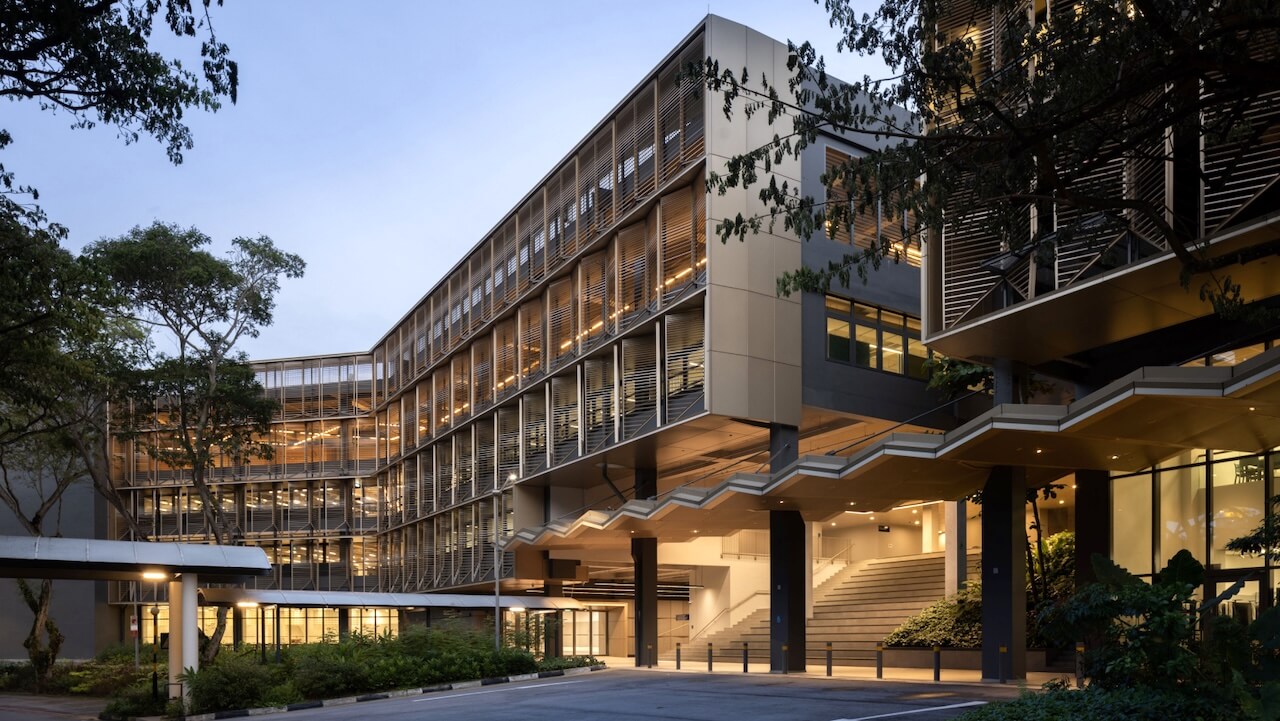
A Different Bet, Made on Purpose
What SUTD built instead is worth taking seriously on its own terms rather than reading as a smaller NUS. On 25 January 2010, SUTD signed a formal collaboration agreement with the Massachusetts Institute of Technology, described at the time as one of the largest university capacity-building partnerships in MIT's history.
Over 90 percent of SUTD's undergraduate curriculum was developed in direct collaboration with MIT faculty. The partnership also produced the SUTD-MIT International Design Centre in 2010, a joint research base focused specifically on technological design.
The practical result for an architecture student is a genuinely different four years. At NUS, architecture is taught within the College of Design and Engineering as a discipline with its own long-established methods, history, and studio culture, refined over six decades.
At SUTD, architecture is one of several pillars built around a shared engineering and computational foundation. A student spends significant time alongside engineering peers, working through the same core technical curriculum, before specialising into architecture through the Architecture and Sustainable Design pillar.
This is not architecture with an engineering elective attached. It is architecture built, from the university's founding document onward, as a technology discipline first.
The SUTD-MIT International Design Centre, the joint research hub that grew out of the original partnership, gives a concrete sense of what that fusion actually produces. Its work spans three declared areas: design theory and methodology, aimed at improving how design itself is taught and practised; societal and global challenges, applying human-centric design to healthcare, sustainable urban environments, and transportation; and systems and device innovation, integrating engineering and digital manufacturing directly into architectural and product design.
A student drawn to sustainable building technology, or to the growing overlap between architecture and smart-systems engineering, trains inside a research culture built around exactly that intersection. Not adjacent to it.

The One Measure Where Both Paths Arrive at the Same Place
For all the distance between the two programmes on the ranking table, one practical fact narrows it considerably. The Board of Architects Singapore fully accredits the Master of Architecture degree from both NUS and SUTD as the requisite professional qualification for registration as an architect in Singapore. Whichever school a student chooses, the destination is identical: the right to practise architecture professionally in Singapore.
The routes there are not identical in length, however.
NUS structures its path as a four-year Bachelor of Arts in Architecture followed by a two-year accredited Master of Architecture, six years in total before a graduate holds the professional qualification.
SUTD instead runs a combined five-year structure through its Architecture and Sustainable Design pillar, arriving at the same BOA-accredited Master of Architecture a full year sooner.
That is a concrete, practical difference the subject ranking says nothing about. For a family weighing tuition costs and opportunity cost alongside academic reputation, it runs in SUTD's favour specifically.
Why This Matters Beyond the Ranking Table
The QS subject ranking measures research citations, faculty reputation surveys, and employer perception. These are real signals, but they describe an institution's accumulated academic standing, not what a specific eighteen-year-old will actually experience in a studio.
A student who wants the discipline taught in its most established, comprehensively resourced form has an unambiguous answer in NUS, backed by decades of faculty expertise and a track record shaping the country's actual built environment.
A student drawn to computational design, parametric modelling, or architecture's growing overlap with engineering and data has a different option in SUTD. It is not necessarily a weaker one. SUTD was built by a partner institution whose own design programmes are among the most respected in the world.
This distinction shows up concretely in how each programme structures its early years. NUS students spend their first years immersed in design studio culture alongside architecture peers exclusively, developing the discipline's traditional visual and spatial vocabulary before broadening into specialised electives.
SUTD students spend their early terms in a shared curriculum with engineering, computer science, and product design peers, absorbing a common technical foundation before the Architecture and Sustainable Design pillar narrows their focus.
A student who already knows architecture is the singular goal is better served by the NUS structure, with its four years of deep, exclusive immersion. A student who is drawn to architecture but genuinely uncertain whether that interest sits closer to design, engineering, or computation is better served by SUTD's shared foundation. It keeps the door open longer before requiring a narrower commitment.
Neither of these is a hedge. They are different answers to different questions, and a family that treats this comparison as a single ranking to be won will miss the actual decision in front of them: not which programme is stronger in the abstract, but which four years actually match the student sitting in front of the portfolio review.

Comparison Table
Category | NUS (Department of Architecture) | SUTD (Architecture and Sustainable Design) |
|---|---|---|
QS Architecture and Built Environment (2026) | 7th globally, 1st in Asia | Not in tracked tier |
Founded | 1958 (at Singapore Polytechnic); moved into NUS 1969 | 2009, as a founding pillar of SUTD |
Institutional age (as of 2026) | 67 years | 16 years |
Faculty structure | College of Design and Engineering | Independent, interdisciplinary academic pillar |
Curriculum partner | None; developed independently over decades | MIT, formal agreement signed 25 January 2010; 90%+ of curriculum MIT-developed |
Professional accreditation | Board of Architects Singapore (BOA), Master of Architecture | Board of Architects Singapore (BOA), Master of Architecture, identical qualification |
Path to professional qualification | 4-year BA Arch + 2-year M.Arch (6 years total) | Combined 5-year structure to accredited M.Arch (1 year shorter) |
Pedagogical approach | Comprehensive, historically rooted architecture discipline | Architecture integrated with engineering and computation from year one |
Overall university QS rank | 10th globally | 266th globally |
Bottom line: On the standard global subject ranking, NUS leads by a wide and institutionally explainable margin, sixty-seven years of accumulated standing against sixteen. SUTD was not built to close that specific gap. It was built around a different premise entirely, architecture fused with engineering and computation from day one, developed directly with MIT. The right choice depends on which of those two educations a specific student actually wants, not which one wins a ranking built to measure something else.
Frequently Asked Questions
Is NUS Architecture really ranked higher than SUTD?
Yes, substantially. NUS ranks 7th globally and 1st in Asia in the QS World University Rankings by Subject for Architecture and Built Environment 2026. SUTD's architecture programme does not appear in this subject ranking's tracked tier.
Why is the gap between NUS and SUTD Architecture so wide?
Subject rankings measure research output, faculty reputation, and citation impact accumulated over time. NUS's architecture department dates to 1958, giving it 67 years to build that standing. SUTD's Architecture and Sustainable Design programme is 16 years old, launched as part of SUTD's 2009 founding.
What makes SUTD's architecture programme different from NUS's?
SUTD was built through a formal partnership with MIT, signed in January 2010, under which more than 90 percent of the undergraduate curriculum was developed. Architecture at SUTD is taught as an interdisciplinary pillar integrated with engineering and computational design from the first year, rather than as a standalone discipline.
Do both NUS and SUTD lead to the same professional architecture qualification?
Yes. The Board of Architects Singapore fully accredits the Master of Architecture from both universities as the professional qualification required to register as an architect in Singapore. The paths differ in length: NUS runs a four-year Bachelor's degree plus a two-year Master's, six years total, while SUTD reaches the same accredited Master of Architecture through a combined five-year structure, one year shorter.
Is SUTD Architecture a weaker choice because it's newer?
Not necessarily weaker, differently built. SUTD's programme was designed around a specific premise, that architecture and engineering should be taught together from the outset, rather than an attempt to replicate NUS's model on a smaller scale. Students drawn to computational design and sustainable building technology may find it a stronger fit despite the ranking gap.
Which school should a prospective architecture student choose?
It depends on what the student wants from the discipline. NUS offers the more established, comprehensively resourced, and globally recognised architecture education. SUTD offers a smaller, MIT-developed programme built specifically around the intersection of architecture, engineering, and computation.
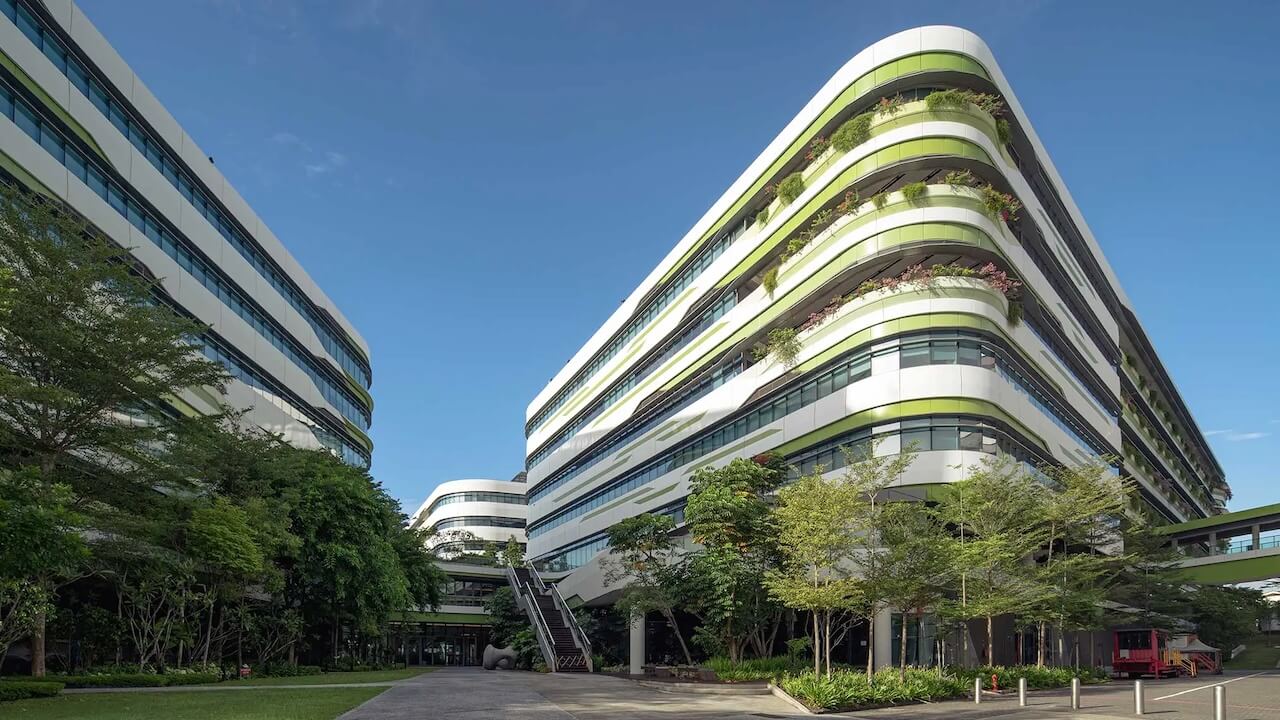
Final Words on NUS Architecture vs SUTD Architecture
Sixty-seven years of institutional weight against sixteen is not a gap a ranking table invents. It is the honest arithmetic of accumulated research output, faculty reputation, and a professional network that has been shaping Singapore's actual skyline since before the country's independence.
NUS earned its 7th-place, top-in-Asia standing the only way that kind of standing gets earned: decade by decade. None of that, though, makes SUTD's bet a lesser one. Building an entire architecture curriculum around MIT's own design-technology research from the first semester was a deliberate choice about what the discipline should become, not an attempt to out-rank an institution with a four-decade head start.
The BOA accreditation both paths lead to is proof the two are not really competing for the same student in the first place. A portfolio review, not a subject ranking, is where this decision actually gets made.