


NTU's Accountancy Programme Is a Recent Addition to an Engineering School. Myth or Fact?
NTU's public identity runs on engineering. It was built in 1981 as a technical institute, and business, the reasoning goes, must have arrived later, once the university broadened beyond its founding mandate. SMU, by contrast, opened in 2000 as a dedicated business university, and within months announced a dedicated School of Accountancy. On that reasoning, SMU's accountancy school looks like the natural home for the discipline, and NTU's programme like the later add-on. The actual dates say otherwise.
A Degree Older Than the University That Now Houses It
NTU's Bachelor of Accountancy carries a history stranger than the university's own founding story. Its lineage traces to 1956, when accountancy education began on the Jurong campus under the original Nanyang University, twenty-five years before Nanyang Technological Institute existed as an engineering-focused school at all.
The programme relocated to NTI's campus in 1987, was renamed the School of Accountancy and Business in 1990 as broader specialisations were added, and only became part of a full university when NTI was reconstituted as NTU in 1991. That renaming came a year before NTU took its university name, which means the school's remit already extended beyond accountancy alone by then.
This timeline runs directly against the assumption most people carry into this comparison. NTU is widely understood as an engineering institute that later added business programmes as an afterthought. Its accountancy lineage says the opposite: the discipline was already being taught, on the same land, under a different university, before the engineering-focused institute that would eventually carry the NTU name had even opened its doors.
What looks, from the outside, like a recent add-on is, on the actual timeline, one of the oldest lineages the institution can claim: forty-five years older than SMU's accountancy programme and a full quarter-century older than the engineering institute itself.
SMU Built a Different Kind of Foundation
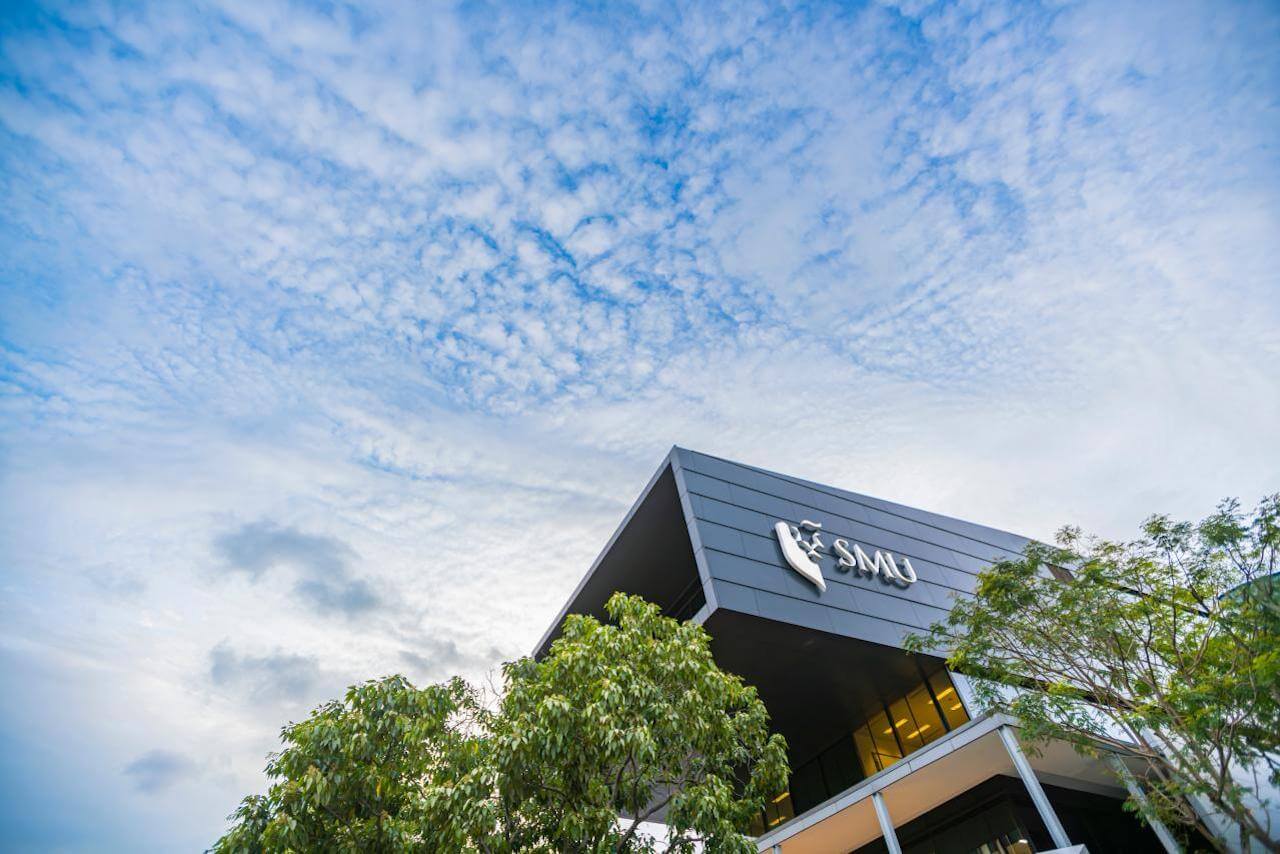
SMU took a newer route to the same discipline. It opened in June 2000 with the School of Business as its first school, and in September 2000 announced a dedicated School of Accountancy, with classes to begin in August 2001. SMU said it would become the first Singapore university to offer an American-style, broad-based accountancy degree with professional recognition. Accountancy was given a school of its own, announced within months of the university opening its doors.
The two programmes are also more closely connected than their different origins suggest. SMU's founding dean of accountancy, Associate Professor Pang Yang Hoong, joined SMU's start-up team in 1998. Before that she had directed the PhD programme and headed auditing and taxation at the School of Accountancy and Business at Nanyang Technological University, according to SMU's own history. The younger school was led from the outset by someone who had held senior roles at the older one.
What the Rankings Actually Show
The two universities' accountancy programmes sit at a meaningful distance on the QS World University Rankings by Subject for Accounting and Finance 2026. NTU ranks 14th globally. SMU ranks 50th, a position SMU's own newsroom highlighted in March 2026 as the first time its programme had broken into the global top 50.
A thirty-six-place gap on a global subject ranking is real. It is also close to the expected outcome given the history above. NTU's decades of accumulated accountancy-specific research output, stretching back to a programme older than the university itself, would be expected to produce exactly this kind of advantage over a school whose first classes began twenty-five years ago.
The more notable number is SMU's own: a school in its twenty-fifth year of teaching reaching the world's top 50 for the first time.
The Professional Pathway Both Degrees Lead To
Beyond the ranking table, the more practical question for a prospective accountancy student is what a degree actually unlocks professionally. Graduates holding an accredited accountancy degree from either NTU or SMU receive a genuinely significant benefit: complete exemption from all six technical modules of the Foundation Programme under the Singapore Chartered Accountant Qualification, the pathway administered by the Institute of Singapore Chartered Accountants.
That exemption allows a graduate to enter directly into the Professional Programme, skipping a stage that students without an accredited local degree must complete in full. Graduates from the 2022/2023 cohort onward who completed specific mapped modules can also claim a further exemption from the Professional Programme's own Financial Reporting module, narrowing the remaining distance to full chartered accountant status even further.
This matters for how the comparison should actually be read. The professional destination, chartered accountant status recognised in Singapore, is the same whichever university a student chooses. The real differences between NTU and SMU are not about which path leads somewhere better professionally. They are about history and setting: a seventy-year lineage inside a university best known for engineering, against a twenty-five-year-old school inside a business-focused one.
Choosing Between a Legacy Programme and a Dedicated School
A student who wants accountancy taught inside the older, more established of the two programmes, with the accumulated reputation of a discipline that predates the university's own founding, has a clear case for NTU. That history also means a larger alumni network embedded across Singapore's accounting firms and finance sector, built up over seven decades rather than two and a half.
A student drawn to a smaller, purpose-built school where accountancy is not one specialisation competing for resources against engineering, business, and a dozen other faculties, but the school's entire reason for existing, has an equally clear case for SMU, backed by a programme improving fast enough to have just posted its best global ranking result to date, and by SMU's broader seminar-based teaching model applied specifically to accountancy training rather than delivered through large lecture cohorts.
Neither path should be read as the lesser choice. They represent two entirely different ways of arriving at the same professional destination, one earned through seven decades of accumulated reputation, the other through a deliberate, purpose-built structure only twenty-six years in the making. The myth this comparison actually corrects is not about quality at all. It is about which university's business identity came first, and the answer runs opposite to what NTU's engineering reputation would suggest.

Comparison Table
Category | NTU (Bachelor of Accountancy) | SMU (School of Accountancy) |
|---|---|---|
QS Accounting and Finance (2026) | 14th globally | 50th globally |
Degree structure | Standalone Bachelor of Accountancy | Standalone degree, dedicated School of Accountancy |
Founded | 1956 (as Nanyang University); moved to NTI 1987; renamed School of Accountancy and Business 1990; NTU from 1991 | Announced September 2000; first classes August 2001 |
Institutional age of accountancy programme (2026) | 70 years | 25 years |
Age gap vs the university's own founding | 25 years older than the institute that became NTU (1981) | Announced within months of SMU's first school opening in 2000 |
Professional recognition | ISCA Foundation Programme exemption | ISCA Foundation Programme exemption |
Teaching model | Large faculty within Nanyang Business School | Small, dedicated seminar-based school |
Bottom line: The assumption that NTU's accountancy programme is a recent addition, following naturally from NTU's engineering-first reputation, does not survive the actual dates. NTU's programme traces to 1956, twenty-five years before the engineering institute that became NTU and forty-five years before SMU's School of Accountancy began teaching in 2001. NTU also holds the stronger current ranking, 14th globally against SMU's 50th, though SMU's School of Accountancy has just reached the top 50 for the first time.

Frequently Asked Questions
Is NTU's accountancy programme really a recent addition to an engineering school?
No. NTU's Bachelor of Accountancy traces its lineage to 1956, under the original Nanyang University, twenty-five years before Nanyang Technological Institute existed as an engineering-focused school at all. Far from being a recent addition, the accountancy programme predates the engineering institution it now sits within.
Why do people assume NTU's business programmes came later?
NTU's public identity is built almost entirely around engineering, since it was founded in 1981 specifically as a technical institute. That reputation creates a natural but incorrect assumption that its business and accountancy programmes were added afterward, when in fact the accountancy lineage predates the engineering institute itself.
Which university ranks higher for Accounting and Finance?
NTU ranks 14th globally in the QS World University Rankings by Subject for Accounting and Finance 2026, ahead of SMU at 50th, which reflects SMU's first appearance in the global top 50 for this subject.
Does SMU's Accountancy programme lead to the same professional qualification as NTU's?
Yes. Graduates of both NTU's Bachelor of Accountancy and SMU's School of Accountancy qualify for complete exemption from the Foundation Programme of the Singapore Chartered Accountant Qualification, administered by the Institute of Singapore Chartered Accountants.
Is SMU's Accountancy programme weaker because it's newer?
Not necessarily. Age explains part of the gap on a ranking that rewards accumulated research output, but SMU's School of Accountancy has just posted its best-ever result, breaking into the QS top 50 for the first time in the 2026 cycle.
Which school should a prospective accountancy student choose?
It depends on what the student values. NTU offers the older programme, with a longer track record and the stronger current ranking. SMU offers a dedicated School of Accountancy that has just reached the global top 50 for the first time.

Final Words on NTU vs SMU Accountancy
A university's public identity is a compressed summary of its history, and compression discards information.
NTU's engineering reputation is accurate for the institute founded in 1981. It says nothing about an accountancy lineage already twenty-five years old by then. The caution runs the other way too.
SMU's youth is easy to read as a limitation, yet its School of Accountancy has reached the global top 50 in its twenty-fifth year of teaching, led from the outset by a dean who had previously held senior roles at NTU's own School of Accountancy and Business.
Because both degrees open the same door to chartered accountant status, the choice rests less on prestige than on where a student will spend their undergraduate years: inside a seventy-year lineage at a university best known for engineering, or inside a school created for accountancy at a business-focused one. Ask each school how large its accountancy classes are, which firms recruit directly from its cohorts, and how its modules map to the ISCA exemption. Those answers will say more about fit than any ranking.
Source note: the QS ranking, SMU's newsroom announcement, and SMU's own history page (School of Accountancy announcement, first classes in August 2001, founding dean's background) are linked inline. Two claims are not hyperlinked because I found only search-result snippets, not a single authoritative page: NTU's 1956, 1987, 1990 and 1991 timeline (secondary sources including Culturepaedia and nlb.sg), and the ISCA Foundation Programme exemption details (ACRA). Verify both against NTU's official history pages and isca.org.sg before publishing, and add direct links.