

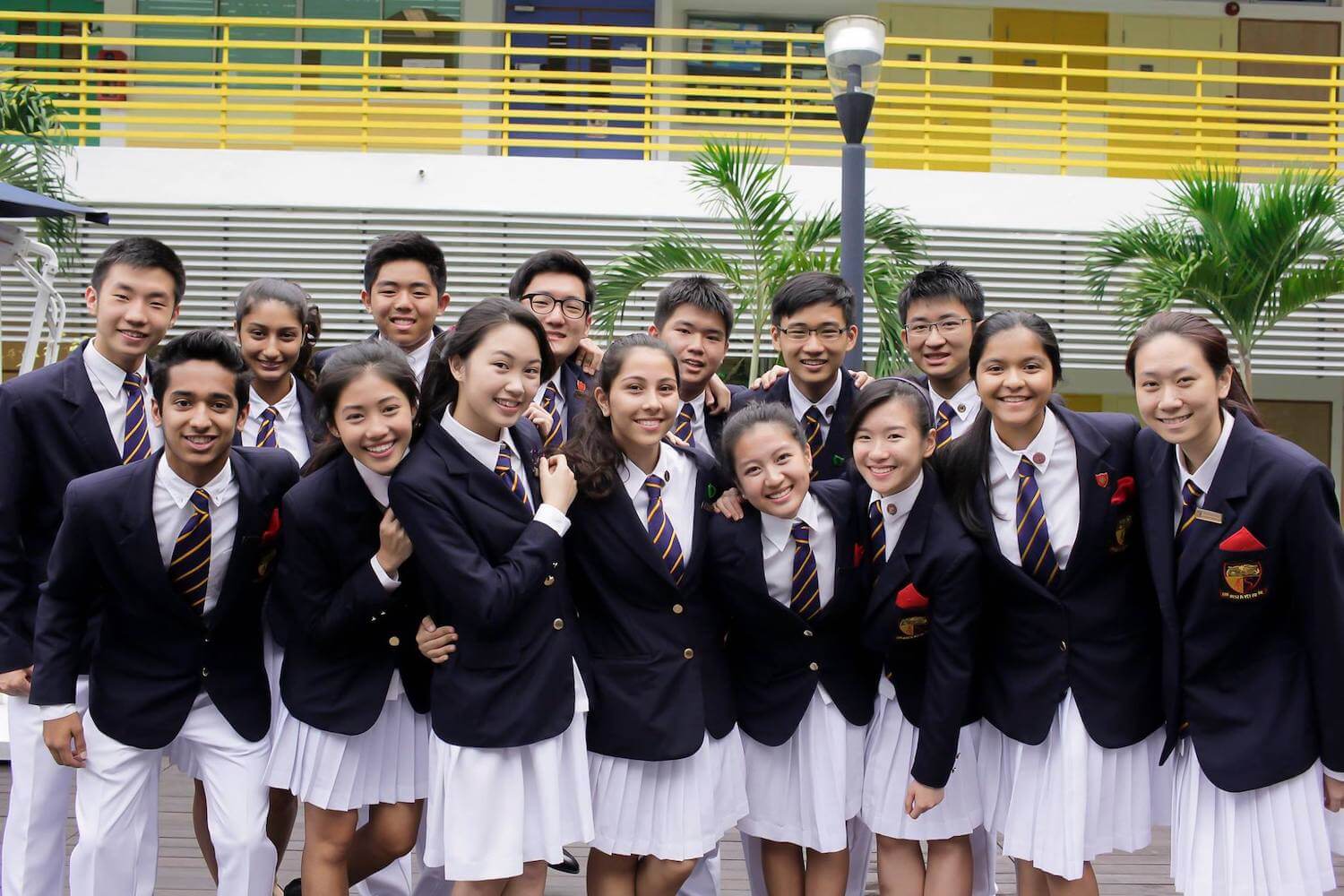

ACS International vs SJI International: Which School Is Right for Your Child?
Both ACS International and SJI International offer established IGCSE to IB Diploma pathways in Singapore, but they differ in faith tradition, school culture, structure, fees, and admissions rhythms. If your family wants a Methodist-rooted ACS community with a six-year Years 1 to 6 pathway, ACS International may be the better fit. If you prefer a Lasallian Catholic ethos with a Grade 7 to Grade 12 High School structure and a strong service-led identity, SJI International may fit better.
ACS International vs SJI International: Quick Comparison
Dimension | ACS International | SJI International |
Parent institution and heritage | Owned by the Methodist Church in Singapore; part of the ACS family identity. | Lasallian Catholic school community; part of the SJI tradition. |
Faith tradition in daily school life | Christian faith is stated as central to the school’s mission, including “servant leadership” and service as part of its Christian faith framing. | Lasallian Catholic values are explicitly positioned as part of student formation (character, service, “people for others”). |
Curriculum and latest published IB results | Six-year programme leading to IGCSE and then the IB Diploma Programme (Years 5 and 6). | High School pathway through Foundation IGCSE, IGCSE, and IB Diploma (Grades 11 and 12). |
Fees (latest published) | SGD S$31,610 to S$41,420, depending on the student’s grade level. | SGD $35,800 to $51,000, depending on the student’s grade level and age. |
Campus and facilities | Anglo-Chinese School (International) campus is located at 61 Jalan Hitam Manis, Singapore 278475, near Holland Village. | St. Joseph’s Institution (SJI) International main campus is at 490 Thomson Road, Singapore 298191. It houses both the Elementary and High School sections. |
Boarding availability | Confirm directly with the school (boarding information is not stated on the pages cited in this article). | Confirm directly with the school (boarding information is not stated on the pages cited in this article). |
Bottom line: Choose ACS International if you want an ACS-branded, Methodist-rooted community and a Years 1 to 6 pathway into IB; choose SJI International if you want a Lasallian Catholic culture with a Grade 7 to 12 structure.
Curriculum Pathways Shape the Student Experience
Both schools prepare students for the IB Diploma, but the route toward IB is not identical. ACS International describes a six-year programme in which Years 1 and 2 provide a general academic foundation, Years 3 and 4 lead into IGCSE, and Years 5 and 6 form the two-year IBDP. It also offers bridging routes for students who need English as an Additional Language support or who are joining at a point that requires preparation before mainstream study.
SJI International uses a grade-based high school structure. Grades 7 and 8 introduce Foundation IGCSE, Grades 9 and 10 cover IGCSE, Grade 10 Foundation Course provides a one-year route before IB, and Grades 11 and 12 are for the IB Diploma. The school also states that students graduate with a WASC-accredited SJI International High School Diploma alongside the high school journey.
This is also where many families get confused by shorthand. In Singapore, “ACSI” may be used by some people to refer to ACS International, while others use it to mean ACS (Independent), a different school. For this ACSI vs SJII comparison, the focus is ACS International and SJI International, not ACS (Independent) or the local St. Joseph’s Institution.
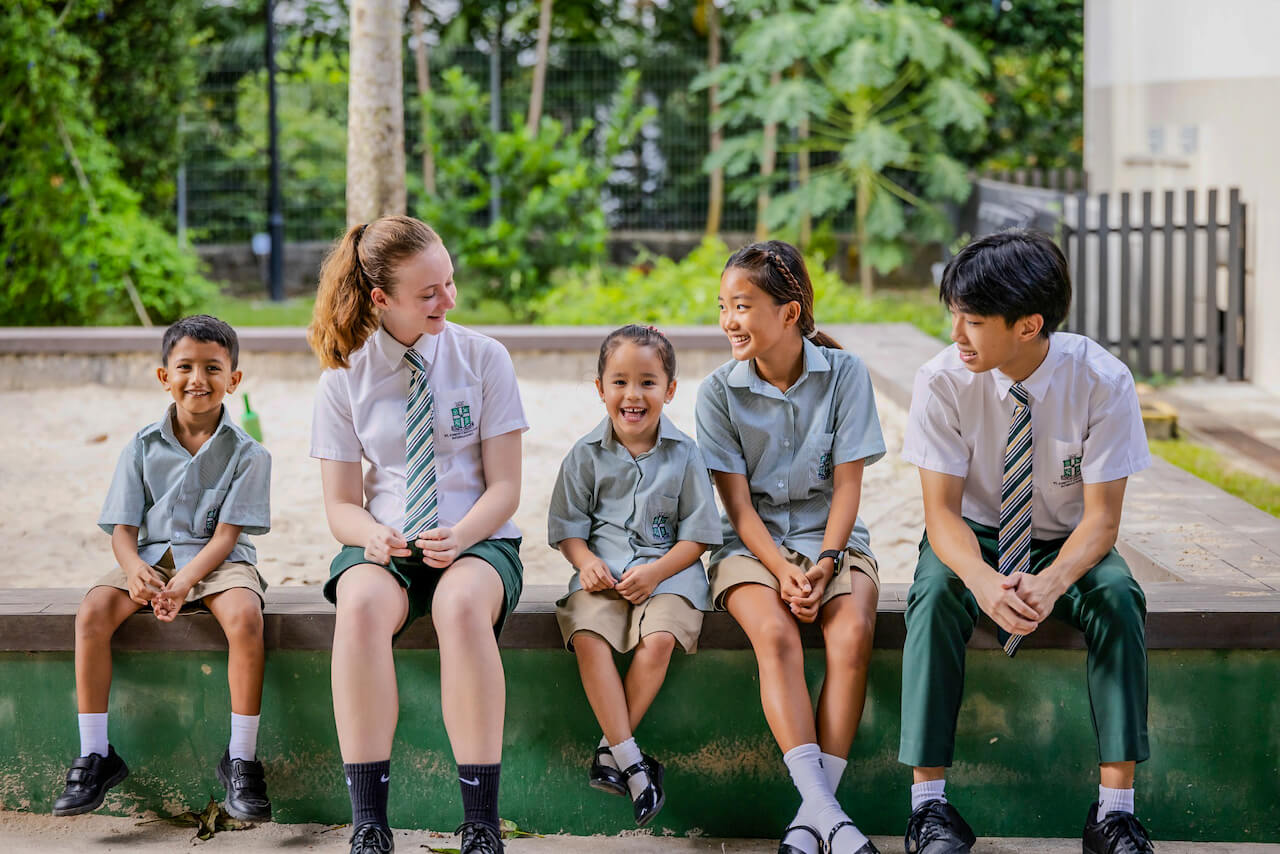
ACS International’s Pathway
ACS International’s mainstream pathway starts with a broad junior foundation, moves into IGCSE, then into IBDP. Years 1 and 2 cover general courses including English, Mathematics, Sciences, Humanities, the Arts, Physical Education, and languages, with Singaporean and Singapore PR students following the MOE Mother Tongue framework where applicable.
The school’s bridging programmes are especially relevant for families relocating to Singapore or students who need time to build academic English. ACS states that bridging students usually move to mainstream classes the following year, depending on the pathway.
By the senior years, ACS International’s IBDP requires six subjects plus the IB Core: Extended Essay, Theory of Knowledge, and Creativity, Activity, Service. The school notes that students take three Higher Level and three Standard Level subjects, with coursework, internal assessments, and externally marked examinations forming part of the Diploma experience.
SJI International’s Pathway
SJI International’s High School journey is organised around Grade 7 to Grade 12. The school presents Grades 7 and 8 as a Foundation IGCSE stage, followed by IGCSE in Grades 9 and 10 and the IB Diploma in Grades 11 and 12.
SJI International also highlights active, inquiry-driven, student-centred learning and a holistic approach that combines curriculum, character development, global awareness, and service. The school’s Grade 10 Foundation Course may be relevant for students who are not entering through the standard two-year IGCSE route but need a bridge before Grades 11 and 12. Families considering late entry should ask how the course prepares students for IB subject choices, assessment habits, and the workload shift.
Faith Tradition in Daily School Life
Families often ask whether the “church-founded” heritage is symbolic or operational. The practical answer is that both schools present faith and values as part of school identity, but the emphasis and language differ.
ACS International states it is owned by the Methodist Church in Singapore and describes Christian faith, servant leadership, and service to the community as fundamental to its framing of education. It also describes IGNITE values: Inspiration and Impact, Godliness, Noble Character, Integrity, Tenacity, and Excellence.
SJI International describes itself as Lasallian and Catholic, and its High School materials emphasise values such as integrity, resilience, compassion, service, leadership, and being “people for others.”
If your family prefers a school where the faith tradition is visible through language, service expectations, and community norms, ask both schools the same direct questions: What is mandatory versus optional? How are students of other faiths included? How do values show up in discipline, leadership, and pastoral support? What does a typical week look like in assemblies and form time?

Co-curricular Life Supports Confidence Beyond Academics
Strong academic pathways matter, but school is also where children test identities: athlete, debater, musician, coder, prefect, volunteer, performer, mentor, teammate. Both schools include co-curricular and service opportunities, though families should look at the current activity list, selection rules, costs, and time commitments before assuming a specific activity will be available every year.
ACS International says each student is expected to undertake at least one CCA, with options across sports, performing arts, and interest groups. The school’s CCA model allows students to engage in multiple CCAs through the year and change CCAs annually if they wish, while some activities are continuous and others are seasonal or term-based.
SJI International presents co-curricular experiences, outdoor education, leadership, and service as part of a holistic learning journey.
How Do Admissions and Entry Points Differ?
ACS International has admissions routes tied to year levels, bridging programmes, and school entrance assessments, while SJI International High School runs an annual admissions cycle with key entry points from Grade 7 through Grade 11. ACS states that some applicants with PSLE, GCE O Level, or IGCSE qualifications may not need written entrance tests but still complete an interview, while SJI International states that all High School applicants participate in an admissions process including tests and interviews.
SJI International’s High School admissions page lists application windows for the 2027 academic year cycle, with different dates for Grades 7 to 8 versus Grades 9 to 11. Because dates are time-sensitive, confirm the latest cycle directly with the school before planning assessments or relocation.
Fees and Total Cost Need Careful Comparison
Fees are one of the most practical parts of the ACS International vs SJI International decision, and they should be treated as more than headline tuition. Families should look at application or test fees, registration or enrolment fees, deposits, development fees, tuition, examination fees, camps, student pass costs, uniforms, transport, meals, books, optional trips, language support, and payment deadlines.
For ACS International’s 2026 fee summary, the school lists standard fees for new students including written-and-interview test fees where required, interview-only fees, registration fees, a development fund, deposit, tuition fees by level, miscellaneous charges, and a Parent School Partners fund. The same fee summary states that tuition is payable by semester, there are two semesters in a year, and additional costs may include compulsory camps, optional overseas trips, IGCSE examination fees, IBDP examination fees, uniforms, meals, books, and transport.
For SJI International High School in 2026, the published fee schedule lists non-refundable application fees of S$2,725 for Grade 7 and S$1,635 for Grades 8 to 12, a non-refundable enrolment fee of S$3,815, and a S$6,000 security deposit. The same schedule lists total 2026 school fees of S$40,954 for Grades 7 and 8, S$41,968 for Grades 9, 10, and 10 Foundation Course, S$51,166 for Grade 11, and S$43,580 for Grade 12.

Academic results matter, but they need context…
SJI International achieved a strong average score of 38 points for the Class of 2025 International Baccalaureate examinations. A total of 195 students passed the full diploma programme successfully. Furthermore, 39% of the cohort scored 40 points or higher, including top marks of a perfect 45 points.
ACS (International) Singapore achieved an outstanding 99.5% pass rate and an average score of 37 points for the Class of 2025 International Baccalaureate Diploma Programme. An impressive 93.6% of the cohort scored above the world average, with 27.66% achieving 40 points or more alongside a perfect top score of 45.
Student Support, Language and Transition Can Decide the Fit
ACS International offers Second Language Bridging classes at Years 1, 2, and 4 for students taking English as an Additional Language, and its curriculum page explains that bridging students usually join mainstream classes the following year. It also notes that Singaporean and Singapore PR students must follow the MOE Mother Tongue approach, while other students are required to study a foreign language unless exempted under local rules.
SJI International highlights language and culture as part of its learning approach, including a Home Language Programme in High School. Its 2026 High School fee schedule lists additional EAL or ELA programme fees for students identified as needing English support, so families should clarify both academic fit and cost if language support may be required.
FAQ: ACS International vs SJI International
Are ACS International and SJI International both religious schools?
Both schools describe a Christian-rooted ethos as part of school identity, but they operate as international schools serving families of many backgrounds. ACS International states it is owned by the Methodist Church in Singapore. SJI International describes itself as Lasallian and Catholic.
Is SJI International Catholic and ACS International Methodist?
Based on each school’s published positioning, yes in heritage and ethos. ACS International links its identity to the Methodist Church in Singapore, while SJI International links its identity to the Lasallian Catholic tradition. The practical next step is to ask how that shows up in assemblies, service requirements, and pastoral care, especially for students of other faiths.
Which School Has the Longer History in Singapore?
ACS (International) has a slightly longer history as an established international school brand, having opened its doors in January 2005, whereas SJI International opened shortly after in January 2007.
However, if you look at their parent school heritages, the underlying histories reverse:
The SJI Heritage: The parent institution, St. Joseph’s Institution (SJI), was founded in 1852, making it the third-oldest secondary school in Singapore.
The ACS Heritage: The parent institution, Anglo-Chinese School (ACS), was founded in 1886.
Both international arms were established as part of a mid-2000s government initiative allowing top-tier local schools to establish local-international hybrid branches.
Do Either School’s Parent Institutions Still Influence the International School Today?
In both cases, the influence is most visible through school identity, values language, and community culture. ACS International explicitly states its ownership link to the Methodist Church in Singapore and frames service through Christian faith language. SJI International frames student formation through Lasallian values and service.
How Do Their 2025 IB Results Compare?
SJI International achieved a strong average score of 38 points for the Class of 2025 International Baccalaureate examinations. A total of 195 students passed the full diploma programme successfully. Furthermore, 39% of the cohort scored 40 points or higher, including top marks of a perfect 45 points.
ACS (International) Singapore achieved an outstanding 99.5% pass rate and an average score of 37 points for the Class of 2025 International Baccalaureate Diploma Programme. An impressive 93.6% of the cohort scored above the world average, with 27.66% achieving 40 points or more alongside a perfect top score of 45.
Which Has More Affordable Fees?
Both publish fee documents, but the cheapest option depends on entry year and what you include (application fees, enrolment or registration fees, deposits, development funds, exam fees, transport, and language support). SJI International publishes annual totals by grade for 2026, while ACS International publishes a detailed 2026 fees summary by level and fee type. Use the two PDFs to model total cost through graduation, not only the first year.
Why Choose CSI to Help You Apply to ACSI or SJII?
CSI supports families through the practical parts of international school placement in Singapore: shortlisting schools that match your child’s learning profile, planning realistic entry points and timelines, preparing documents for applications, and helping you compare fee structures and transition support. If you are deciding between ACS International and SJI International, we can help you turn school marketing materials into a fit-based plan for your child.
The Best Choice is the One Your Child Can Grow Into
There is no universal winner in the ACS International vs SJI International comparison. Both schools offer established international pathways in Singapore, both lead students toward IGCSE and the IB Diploma, and both describe education as more than exam preparation. The difference lies in the route, culture, support, admissions timing, and day-to-day fit.
If your family is deciding between ACS International or SJI International, start with your child rather than the school’s reputation. Look at how they learn, how they handle challenge, what kind of community brings out their confidence, and what support they may need before IB. Then visit, ask direct questions, compare the latest official fee and admissions documents, and choose the environment where your child has the best chance to become capable, grounded, and ready for what comes next.
Final Words on Choosing International Schools in Singapore
Still weighing your options? Finding the perfect fit comes down to looking at the full picture—from campus culture and curriculum pathways to fee structures. To help you make an informed choice, explore our side-by-side comparison guides: check out our other one vs one comparison:
Dulwich College Singapore vs United World College Southeast Asia
Singapore American School vs United World College Southeast Asia
Singapore American School vs Dulwich College Singapore
NLCS Singapore vs Dulwich College Singapore
Tanglin Trust School vs Dulwich College Singapore
Hwa Chong International School vs Dulwich College Singapore
Hwa Chong International vs St. Joseph Institutional International
ACS International School vs St. Joseph Institutional International
Or if you are still unclear about the international schools in Singapore, you can read up on Singapore international schools.